
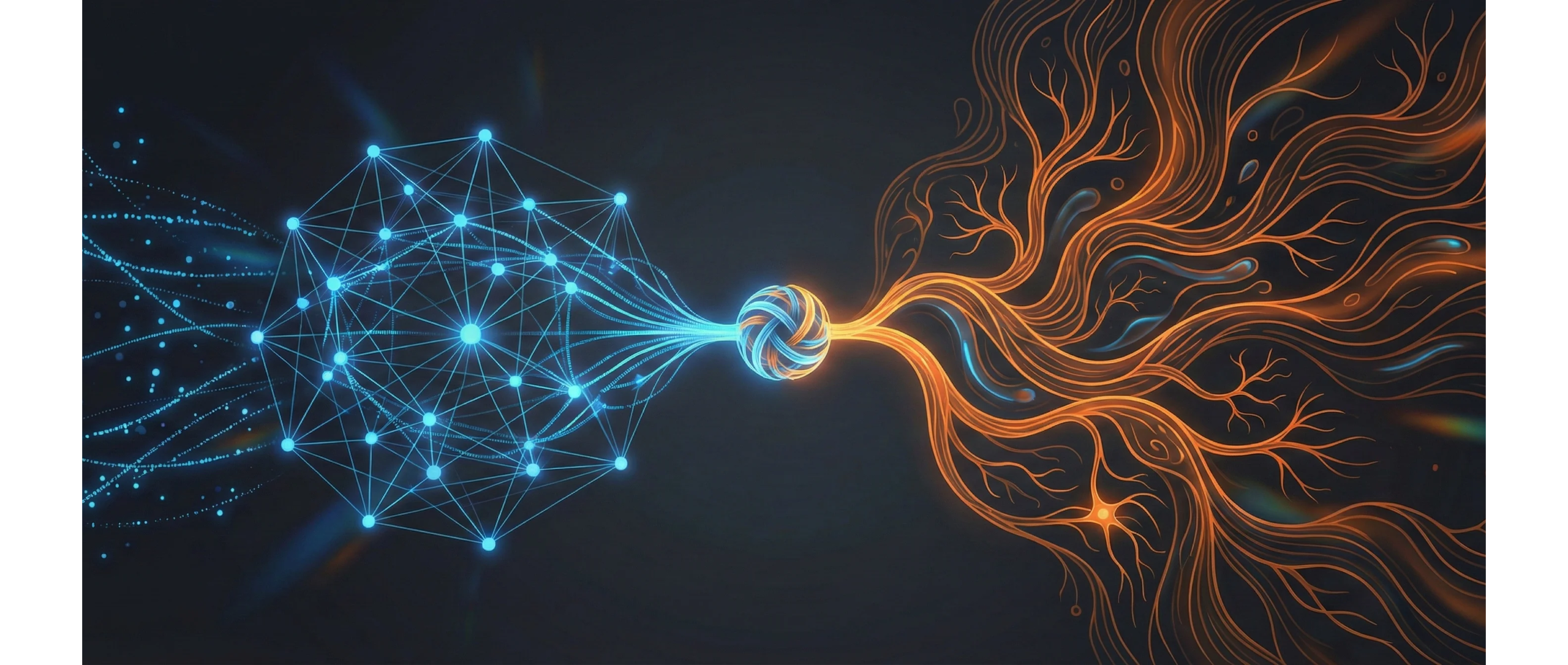
When machines decide better — and when we should not trust them
Decision-making has always been one of the most human abilities we have. From small daily choices to critical decisions about healthcare, justice, economics, or war. Now that artificial intelligence is deeply involved in these areas, a serious question keeps coming up: are we slowly handing over our most important decisions to machines? And if we are, is(Artificial Intelligence Decision-Making) that a smart move or a dangerous one?
When people talk about AI making decisions, reactions are usually extreme. Some are afraid of losing control completely. Others believe AI is just a neutral tool that always improves outcomes. Reality sits somewhere in between. To understand it properly, we need to look at where artificial intelligence actually outperforms humans, why humans still hesitate to trust it with major decisions, and what kind of decisions should — or should not — be delegated to machines.
Where artificial intelligence truly outperforms humans
Let’s start with an uncomfortable truth: in certain types of decision-making, AI is already better than humans. Not because it is “smarter” in a human sense, but because it doesn’t suffer from human limitations. Humans get tired, distracted, emotional, and overwhelmed by complexity. AI does not.
One major advantage is speed. Artificial intelligence can process and evaluate massive amounts of data in seconds. In financial markets, algorithmic systems make decisions in fractions of a second — far faster than any human trader could ever react. In these environments, speed alone makes human-only decision-making unrealistic.
Another advantage is scale. Humans can usually consider only a limited number of variables at once. AI systems can analyze thousands or even millions of data points simultaneously. In healthcare, for example, an AI system can examine patient history, lab results, medical imaging, genetic data, and millions of similar cases at the same time. No human doctor can do that alone.
A third advantage is emotional neutrality. Emotions are a double-edged sword. They help humans empathize and understand context, but they also introduce fear, bias, stress, and overconfidence. AI does not panic, hesitate, or act out of pride or fear. In high-pressure environments like risk analysis or crisis management, this emotional distance can be a real strength.
However, this is where nuance matters. These advantages only apply in well-defined, data-rich situations. Once a problem becomes ambiguous, ethical, or deeply human, the strengths of AI begin to fade.
Why humans still hesitate to trust AI with major decisions
Despite AI’s clear strengths, people remain reluctant to fully hand over important decisions. This hesitation is not irrational — it has solid reasons behind it.
The first reason is responsibility. When a human makes a bad decision, we know who is accountable. When an algorithm makes a bad decision, responsibility becomes blurry. Is it the developer? The company? The organization that deployed the system? This lack of clear accountability makes people uncomfortable — especially when lives or freedoms are at stake.
The second reason is transparency. Many AI systems operate as “black boxes.” We see the input and the output, but we don’t fully understand how the system arrived at its conclusion. For high-stakes decisions, this lack of explanation is unsettling. Humans want to know why a decision was made, not just what the decision is.
The third reason is ethics. Important decisions are rarely purely logical. They involve values, moral judgment, empathy, and context. Choosing between two bad outcomes, weighing fairness, or understanding human suffering cannot be reduced to data alone. People fear that handing these choices to machines removes an essential human layer from decision-making.
Should AI be the decision-maker or just an advisor?
This leads to one of the most important questions in the entire debate. Maybe the real issue isn’t whether AI or humans should decide — but what role AI should actually play.
Many experts distinguish between decision support and decision authority. Artificial intelligence excels at decision support. It can collect data, analyze options, predict outcomes, and highlight risks. It can even suggest solutions humans might overlook. But decision authority — the final choice and responsibility — is a different matter.
This idea is often described as “human-in-the-loop.” AI provides analysis and recommendations, while humans remain involved in approving or rejecting the final decision. This model aims to combine machine efficiency with human responsibility.
The danger arises when humans slowly step out of the loop. As AI systems become more accurate and efficient, people may stop questioning them. Over time, “AI suggested it” turns into “AI decided it,” even if no one explicitly planned it that way.
Should the final decision always belong to humans?
There is no universal answer. In some environments, speed matters more than human reflection. Air traffic control systems, cybersecurity defenses, and certain military systems operate on time scales where human reaction is simply too slow. In these cases, humans have already allowed machines to act autonomously within predefined rules.
Even then, humans usually define the boundaries. AI does not act freely; it operates within limits set by human designers. This distinction is critical. Delegating execution is not the same as delegating moral authority.
The real risk is not AI taking control by force, but humans giving it control gradually — often without fully realizing the consequences.
Does artificial intelligence make mistakes?
One of the most dangerous myths about AI is that it is always right. It is not. Artificial intelligence makes mistakes — sometimes serious ones.
AI systems learn from data. If that data is incomplete, outdated, or biased, the decisions will reflect those flaws. AI does not understand reality; it recognizes patterns. When the patterns are wrong or incomplete, the conclusions will be wrong as well.
There is also an important difference between human error and machine error. Human mistakes are usually limited in scope. Machine mistakes can scale instantly. A flawed algorithm can repeat the same wrong decision thousands of times without hesitation.This is why blind trust in AI is just as dangerous as blind rejection of it.
Real-world cases where AI decisions went wrong
One of the clearest examples of AI decision-making failures comes from facial recognition systems. These systems were introduced to improve security and efficiency, especially for law enforcement. In practice, however, they have led to multiple cases of wrongful arrests. The algorithms identified individuals as “matches” based on flawed or biased training data. From the system’s perspective, the decision made sense statistically. From a human perspective, it was deeply unjust.
Healthcare offers another sobering set of examples. AI systems designed to assist with diagnosis or treatment recommendations have, in some cases, produced misleading or incorrect suggestions when trained on incomplete or biased datasets. The real danger emerged when medical professionals trusted these outputs without sufficient scrutiny. In these cases, the failure was not only technological, but human: people stepped back too far and treated the system as authoritative rather than advisory.
Financial markets have also experienced the consequences of automated decision-making. Algorithmic trading systems have triggered sudden market crashes within seconds — events later referred to as “flash crashes.” These decisions happened too fast for humans to intervene. Afterward, even experts struggled to fully explain why the algorithms behaved the way they did. The issue was not just loss of money, but loss of understanding.
These examples reveal a pattern. The problem is rarely that AI is “evil” or intentionally wrong. The problem is speed, scale, and opacity. When machines make mistakes, they do so efficiently and repeatedly.
Areas where decision-making is already delegated to AI
Despite public hesitation, many decisions are already being made by machines. We simply don’t label them as such.
In urban infrastructure, AI systems manage traffic lights, optimize public transport schedules, and respond to congestion in real time. In cybersecurity, algorithms decide whether a behavior is suspicious and whether a connection should be blocked — often without human approval, because delay would be costly.
In digital platforms, AI systems decide which content is promoted, hidden, or removed. These decisions shape public discourse, influence opinions, and affect mental health, even though users rarely see the decision-making process behind them.
In finance and insurance, AI-driven scoring systems influence credit approvals, pricing, and risk assessments. In recruitment, algorithms screen resumes and decide who moves forward — long before a human sees an application.
In all these cases, humans defined the framework, but machines make countless small decisions autonomously. Over time, these “small” decisions accumulate into large societal effects.
How AI handles new and unseen situations
One of the most critical weaknesses of AI decision-making appears when the world changes. Artificial intelligence learns from historical data. It is fundamentally backward-looking. When it encounters situations that do not resemble past patterns, it struggles.
When something truly new happens — a global crisis, a sudden social shift, an unexpected technological disruption — AI systems attempt to map the unknown onto familiar patterns. Sometimes this works. Sometimes it fails badly.
Humans, by contrast, can reason beyond data. They use intuition, analogy, creativity, and moral judgment when there is no precedent. This ability is especially important in moments of uncertainty. That is why, in major crises, human decision-makers still take the lead, even when AI tools are available.
This difference explains why AI is powerful in stable environments but risky in volatile ones.
Which decisions should be delegated to AI?
At this point, the discussion becomes practical. Some decisions are genuinely well-suited for artificial intelligence. These are decisions that are data-heavy, repetitive, time-sensitive, and low in ethical ambiguity.
Examples include fraud detection, traffic optimization, energy distribution, logistics planning, and large-scale risk analysis. In these areas, AI can outperform humans consistently and reliably.
Delegating such decisions to AI does not remove human responsibility; it reallocates human effort toward oversight, strategy, and improvement.
Which decisions should not be delegated to AI?
Other decisions should remain firmly human-led. These include decisions that directly affect human rights, dignity, freedom, or life. Judicial rulings, lethal military actions, critical medical decisions, and large-scale political choices fall into this category.
In these domains, AI can assist by providing analysis, predictions, and warnings — but not authority. The final responsibility must remain human, not because humans are perfect, but because accountability, ethics, and moral judgment cannot be automated.
Final conclusion: AI versus humans is the wrong question
The real issue is not whether AI is better than humans at decision-making. The real issue is how we design the relationship between the two.
Artificial intelligence is a powerful decision-support tool. It excels at processing data, identifying patterns, and optimizing outcomes within defined boundaries. Humans excel at judgment, responsibility, ethics, and understanding context.
Problems arise when we confuse efficiency with wisdom, or when we quietly hand over responsibility because it feels convenient.
AI should help humans decide better — not decide instead of them. The real danger is not artificial intelligence taking control. The real danger is humans giving it control without fully understanding what they are giving up.