
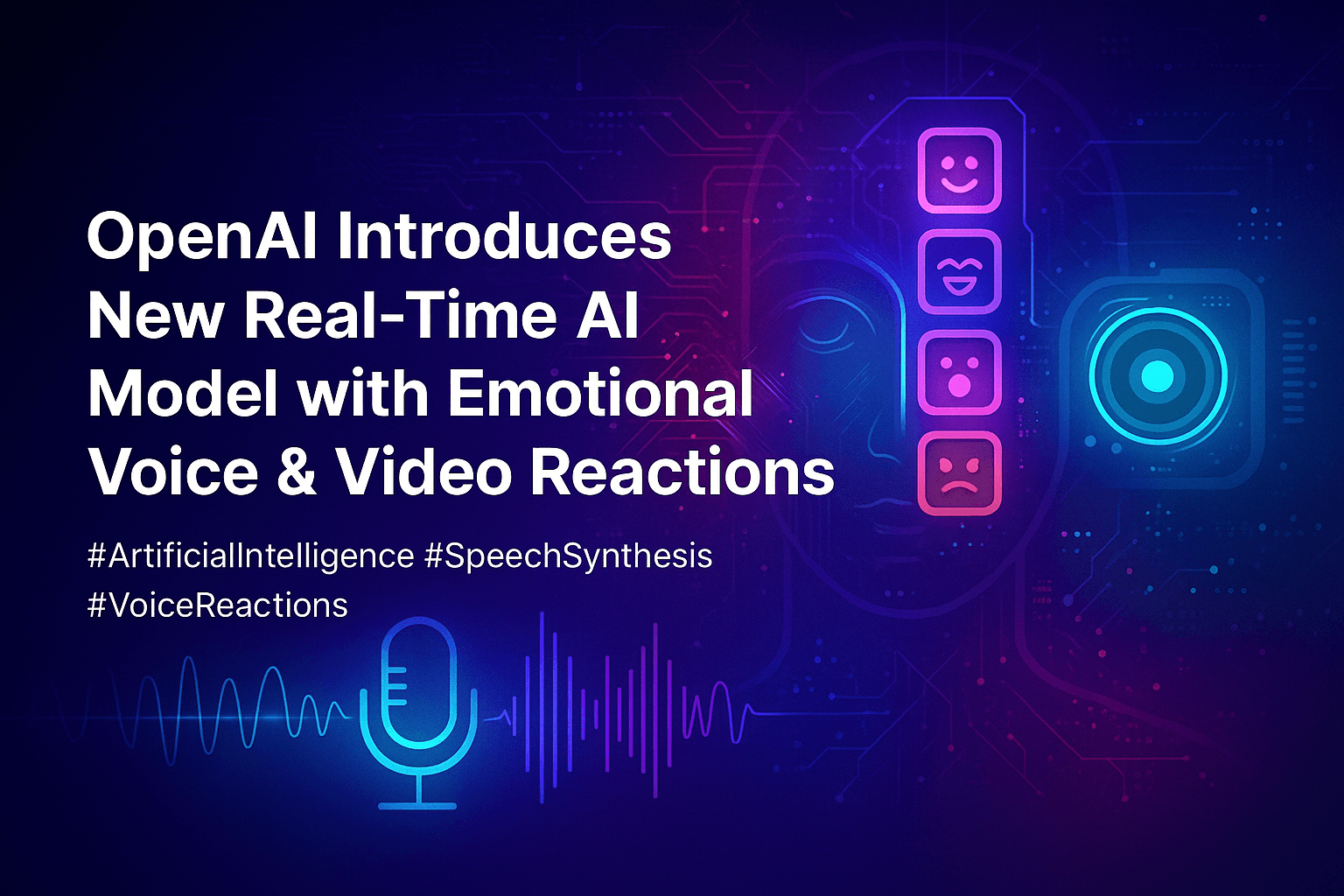
OpenAI has unveiled a new Real-Time AI model designed to bring human-like emotional depth to digital interaction. Unlike previous systems that relied solely on text or delayed audio responses, this new model observes facial expressions, interprets emotional cues, and adjusts its tone instantly — creating an interaction that feels more natural, fluid, and intuitive.
In live demonstrations, the AI analyzes micro-expressions captured through a user’s camera and modifies its vocal tone to match the emotional setting. If the user appears confused, the system speaks more slowly and reassuringly. When sensing enthusiasm, it adopts a livelier and more dynamic tone.
This adaptive behavior — shifting between calm, excited, empathetic, or neutral speech patterns — represents one of the most sophisticated emotional modeling capabilities seen in AI so far.
The real-time processing engine allows the AI to generate responses even before the user finishes speaking, simulating the natural overlap that occurs in human conversation. This makes the interaction faster, more dynamic, and far less robotic than previous generations of conversational AI.
Beyond the technical showcase, OpenAI highlighted a wide range of practical applications.
Educators may use the system for real-time tutoring that reacts to a student’s mood. Accessibility tools can provide more natural support for users with visual or cognitive challenges. Creators can use the model for expressive storytelling, voiceovers, or interactive characters in games and virtual worlds.
Real-time translation with emotional context is another area the company expects to expand.
However, the introduction of emotion-aware AI also raises concerns. Specialists warn that systems capable of reading facial expressions could be misused for surveillance or behavioral manipulation. Calls for transparent data practices and stronger user consent mechanisms are growing as such models become more advanced.
Although OpenAI has not yet confirmed a public release timeline, early testing is expected soon.If successful, this technology could redefine how humans communicate with digital systems, bringing AI one step closer to natural emotional intelligence.